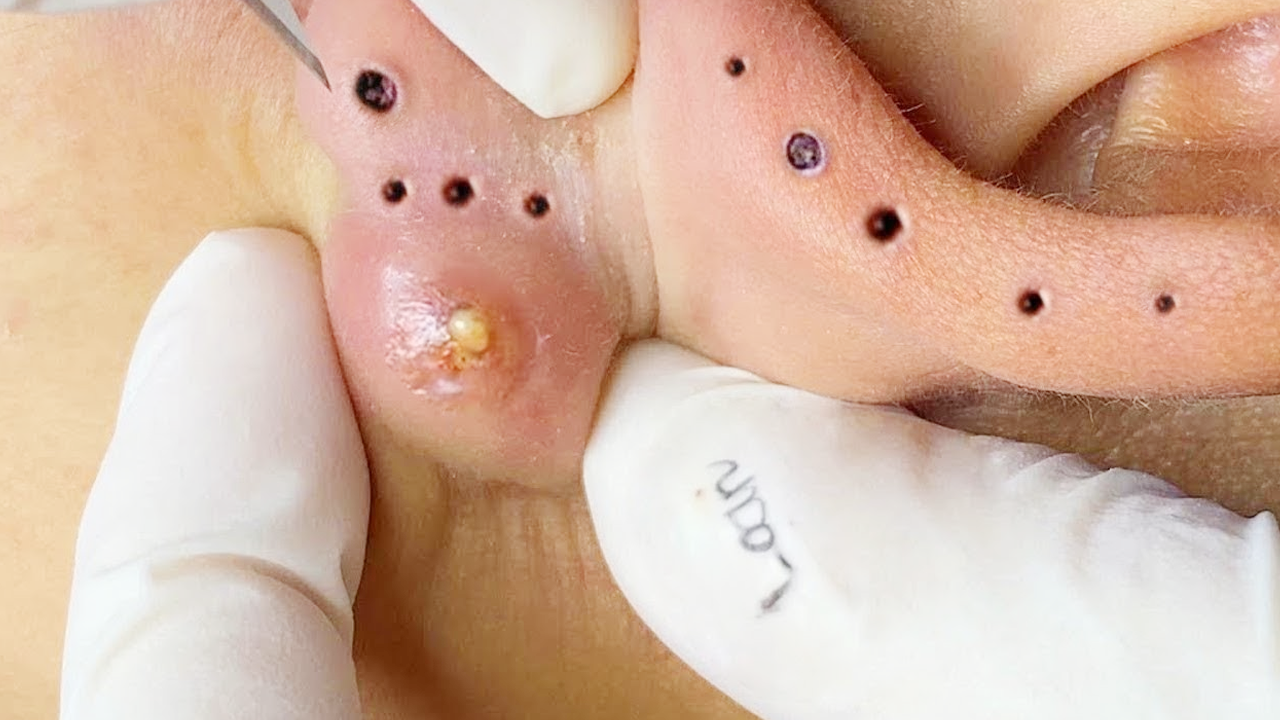
The image presents an intense and highly detailed close-up of an inflamed earlobe undergoing a medical skin procedure. The focus is on a swollen, reddened bump near a series of decorative piercings. The ear itself is adorned with multiple small, evenly spaced black studs arranged along the cartilage, giving a modern, curated aesthetic. In contrast to the clean and intentional placement of the piercings, the lower lobe shows a painful-looking pustule, swollen and taut, with a visible yellow center indicating a buildup of pus beneath the skin.
A pair of gloved hands—clearly belonging to a trained professional—gently but firmly stabilize the ear. The white latex gloves suggest a sterile environment, likely a dermatology clinic, piercing studio, or medical spa. The practitioner appears to be preparing to treat or extract the inflamed lesion. A precision tool is positioned just above the surface of the skin, indicating that this is not a casual squeeze but a controlled and careful procedure.
The lighting in the image is bright and clinical, highlighting every texture and detail of the skin. The redness surrounding the bump suggests irritation or infection, possibly caused by friction, trapped bacteria, or complications from piercing. The skin appears stretched and glossy due to inflammation, emphasizing the pressure building beneath the surface.
This visual tells a deeper story about body modification and aftercare. Ear piercings, while popular and stylish, require consistent hygiene and monitoring. When proper care is neglected or when the body reacts sensitively, infections can develop. The pustule shown in the image could be the result of blocked pores, an abscess, or a localized bacterial infection near a piercing site.
Despite the discomfort the image may evoke, it also carries a sense of relief and resolution. The presence of professional tools and gloves suggests that the issue is being handled safely. There is reassurance in knowing that such skin problems, though painful and alarming in appearance, are treatable with proper technique and sanitation.
The composition of the image draws attention to contrast—the clean lines of decorative piercings versus the unpredictable nature of skin inflammation. The ear jewelry appears neat, symmetrical, and intentional. Meanwhile, the swollen lesion disrupts that symmetry, reminding viewers that the body can react in unexpected ways.
There is also a subtle educational value in this image. It highlights the importance of monitoring new piercings for signs of infection: redness, swelling, warmth, tenderness, and pus formation. Early intervention can prevent complications such as spreading infection or scarring. Professional extraction, as depicted, is generally safer than attempting to squeeze or treat such issues at home.
Emotionally, the image might trigger discomfort for some viewers, especially those sensitive to medical or dermatological procedures. Yet for others—particularly fans of skincare or extraction videos—it can evoke fascination. The detailed close-up captures a moment of tension just before treatment, creating anticipation.
The texture of the skin is particularly vivid. Fine pores, natural creases, and subtle variations in tone are all visible. This realism enhances the sense that the viewer is witnessing an authentic medical moment rather than a staged or filtered scene.
The gloves also play a symbolic role. They represent hygiene, professionalism, and care. Their clean white color contrasts sharply with the redness of the skin and the dark piercings, emphasizing sterility and precision. The practitioner’s steady grip conveys confidence and control, suggesting that the discomfort will soon be resolved.
From a broader perspective, the image speaks to the balance between beauty and maintenance. Piercings are a form of self-expression and artistry. However, they come with responsibility. Proper cleaning routines, high-quality jewelry materials, and awareness of one’s body reactions are essential for preventing complications like the one shown.
The swollen bump itself is a reminder of how the body responds to bacteria and trauma. When the skin barrier is disrupted—such as by piercing—it becomes more vulnerable to infection. The immune system reacts by sending white blood cells to the area, creating pus as it fights off bacteria. This natural defense mechanism, while protective, results in the uncomfortable swelling visible in the image.
In the final analysis, the photograph captures a moment of intervention and care. It freezes the precise second before relief begins—the calm before the procedure resolves the painful pressure. It is clinical, raw, and honest. It shows not just a skin condition, but the reality behind aesthetic choices and the importance of professional care.
Ultimately, the image serves as both a cautionary and reassuring visual. It cautions viewers about the importance of hygiene and proper aftercare in body modifications. At the same time, it reassures them that even uncomfortable skin issues can be managed safely with the right approach. It is a powerful depiction of the intersection between personal style, human biology, and professional medical treatment.