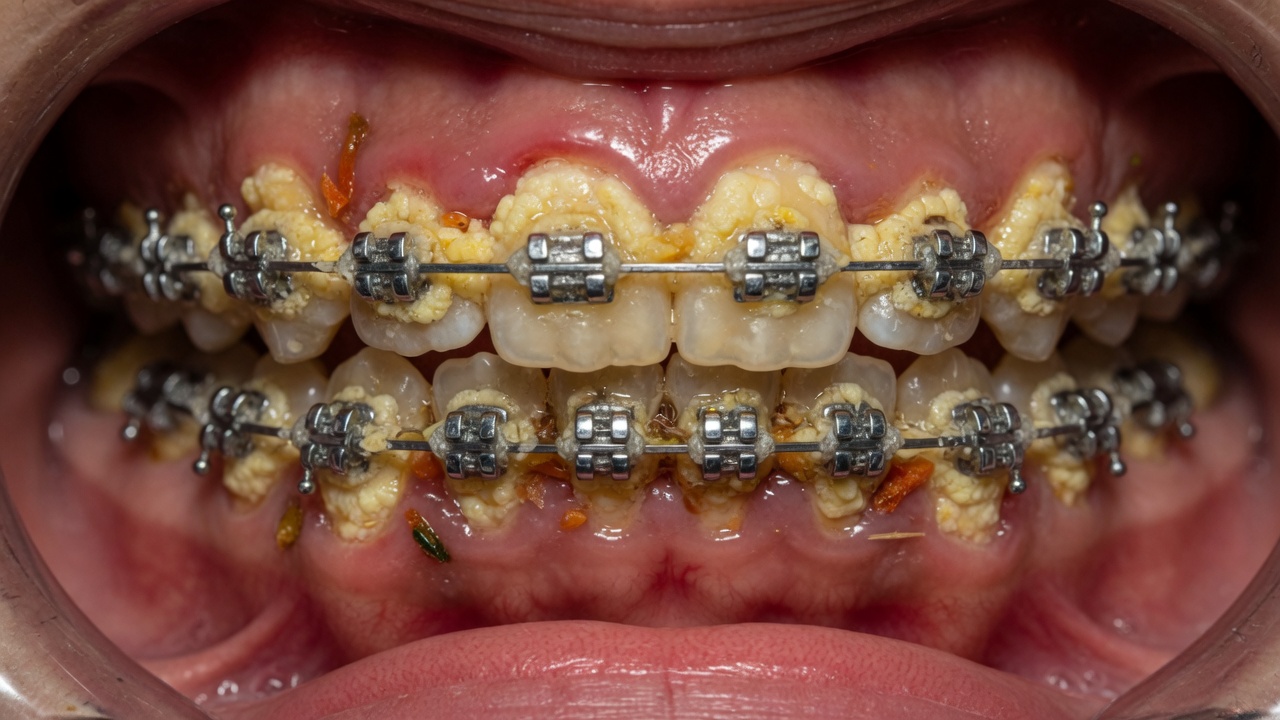
Braces are a common orthodontic treatment used to correct misaligned teeth, improve bite functionality, and enhance overall oral aesthetics. While braces are highly effective in achieving these outcomes, they can also introduce new challenges to maintaining optimal oral hygiene. The image provided illustrates a severe case of plaque accumulation on teeth with braces, highlighting the potential consequences of inadequate dental care during orthodontic treatment. This article explores the causes, risks, and preventive measures associated with oral hygiene in patients with braces, emphasizing the critical importance of daily care and professional intervention.
What is Plaque and Why is it a Concern?
Dental plaque is a sticky, colorless or pale-yellow biofilm composed of bacteria, food particles, and saliva. Plaque forms continuously on tooth surfaces, particularly in areas that are difficult to clean. If left untreated, plaque can calcify into tartar (calculus), which is harder to remove and can lead to severe oral health issues. In individuals with braces, the metal brackets and wires create additional surfaces where plaque can accumulate, making effective oral hygiene more challenging.
Plaque is primarily responsible for common dental problems such as cavities, gum inflammation, and bad breath. It contains bacteria that metabolize sugars from food and beverages, producing acids that erode tooth enamel. Over time, this process can result in dental decay, increased sensitivity, and even tooth loss if neglected.
Why Braces Increase the Risk of Plaque Buildup
Braces introduce complex surfaces in the mouth that are more difficult to clean than natural teeth. The brackets, wires, and elastic bands create nooks and crannies where food debris can easily lodge. This makes brushing and flossing more time-consuming and challenging, requiring specialized techniques and tools.
Some factors that contribute to increased plaque accumulation in braces include:
- Bracket and Wire Complexity: Metal or ceramic brackets and archwires form barriers that trap food particles, particularly around the gumline and between teeth.
- Dietary Habits: Sticky, sugary, and hard foods can become lodged in braces, providing a nutrient-rich environment for bacterial growth.
- Inconsistent Oral Hygiene: Skipping brushing or flossing, or performing them inadequately, accelerates plaque formation. Even minor lapses can lead to significant buildup over time.
The image exemplifies severe plaque accumulation around the brackets, indicating a combination of these risk factors at play. In such cases, the plaque appears dense and yellowish, sometimes even incorporating remnants of food debris, which can exacerbate bacterial proliferation.
Potential Consequences of Poor Oral Hygiene with Braces
Failing to maintain proper oral hygiene during orthodontic treatment can have severe implications. The consequences include:
1. Gum Disease (Gingivitis and Periodontitis)
Plaque buildup near the gumline can trigger inflammation, leading to gingivitis. Symptoms include redness, swelling, bleeding during brushing or flossing, and tenderness. If left untreated, gingivitis may progress to periodontitis, where the supporting structures of the teeth, including bone, are damaged. Periodontitis can lead to tooth mobility and potential tooth loss.
2. Dental Caries (Cavities)
The acids produced by bacteria in plaque erode the enamel, creating cavities. Braces can make early detection of cavities difficult because the brackets may hide small lesions. If cavities remain untreated, they can progress to deeper layers of the tooth, potentially requiring root canal therapy or extractions.
3. Enamel Demineralization and White Spot Lesions
White spot lesions are areas of enamel demineralization caused by prolonged plaque presence. These spots are often permanent and may remain visible even after braces are removed. They are an early indicator of decay and can compromise the aesthetic outcome of orthodontic treatment.
4. Bad Breath and Oral Discomfort
Persistent plaque and trapped food particles contribute to halitosis (bad breath) and a general feeling of oral discomfort. The bacterial load in the mouth can also increase the risk of secondary infections.
5. Delayed Orthodontic Progress
Excessive plaque and inflammation may require orthodontists to temporarily pause treatment. Severe gum disease or decay might necessitate interventions that prolong the duration of braces, increasing the overall treatment time and costs.
Effective Oral Hygiene Strategies for Braces Wearers
Preventing the severe plaque buildup seen in the image requires a disciplined oral hygiene routine. Below are recommended practices:
1. Brushing Techniques
- Use a soft-bristled toothbrush or an electric toothbrush designed for braces.
- Brush after every meal, focusing on the areas around brackets and under wires.
- Employ circular motions and angle the brush at 45 degrees toward the gumline.
- Ensure that all surfaces of the teeth—front, back, and chewing surfaces—are cleaned thoroughly.
2. Flossing with Braces
- Regular flossing is essential to remove debris between teeth that brushing cannot reach.
- Use floss threaders or orthodontic floss to navigate around wires and brackets.
- Interdental brushes can also clean spaces between brackets effectively.
3. Mouth Rinses and Antimicrobial Solutions
- Fluoride mouthwashes strengthen enamel and reduce the risk of cavities.
- Antimicrobial rinses can reduce bacterial load, especially for those with difficulty achieving complete mechanical cleaning.
4. Dietary Modifications
- Limit sugary, sticky, and hard foods that contribute to plaque accumulation.
- Cut fruits and vegetables into small pieces to avoid them getting stuck in braces.
- Rinse the mouth with water after meals if brushing is not immediately possible.
5. Regular Dental Checkups
- Professional cleanings every 3–6 months help remove plaque and tartar buildup that daily hygiene may miss.
- Orthodontists can monitor the condition of teeth, gums, and braces to prevent long-term damage.
Professional Interventions for Severe Plaque Cases
In cases like the image, where plaque buildup is extreme, simple home care may not suffice. Professional dental interventions are necessary:
- Scaling and Polishing: Dentists use ultrasonic scalers and hand instruments to remove hardened plaque (tartar) and polish teeth surfaces.
- Orthodontic Bracket Cleaning: Specialized tools help remove plaque around brackets and wires without damaging the braces.
- Fluoride Treatments: Topical fluoride applications can remineralize enamel and prevent white spot lesions.
- Education on Oral Hygiene: Dentists and orthodontists can provide personalized guidance on brushing, flossing, and diet to prevent recurrence.
Psychological and Social Considerations
Severe plaque and poor oral hygiene can impact self-esteem and social interactions. Patients with visible yellowish plaque and inflamed gums may feel self-conscious about smiling or speaking, especially during orthodontic treatment when facial aesthetics are a focus. Reinforcing the importance of oral hygiene and offering empathetic support are crucial aspects of dental care.
Long-Term Implications
Failure to maintain oral hygiene during orthodontic treatment can have long-lasting effects:
- Permanent Staining: Chronic plaque accumulation can cause enamel discoloration.
- Structural Damage: Untreated cavities and gum disease may require complex restorative treatments.
- Financial Costs: Repairing damage caused by poor oral care increases the cost of dental treatment significantly.
- Health Risks: Emerging research links chronic oral inflammation with systemic conditions such as cardiovascular disease, diabetes, and adverse pregnancy outcomes.
Technological Aids to Improve Oral Hygiene with Braces
Recent innovations in dental care can assist braces wearers:
- Water Flossers: Use pressurized water to remove debris from hard-to-reach areas around braces.
- Orthodontic Toothbrushes: Designed with v-shaped bristles to clean around brackets efficiently.
- Dental Apps and Reminders: Mobile apps can remind patients to brush and floss regularly, improving compliance.
Encouraging Compliance and Motivation
Maintaining rigorous oral hygiene can be challenging, particularly for adolescents who are primary candidates for braces. Strategies to encourage compliance include:
- Visual Education: Showing patients images of severe plaque buildup, like the provided image, to illustrate consequences.
- Tracking Progress: Using charts or apps to monitor brushing and flossing habits.
- Incentives: Rewarding consistent oral care practices with positive reinforcement.
Conclusion
The image of teeth with braces covered in heavy plaque serves as a stark reminder of the importance of maintaining meticulous oral hygiene during orthodontic treatment. Plaque accumulation can lead to cavities, gum disease, white spot lesions, bad breath, delayed orthodontic progress, and long-term dental issues. Effective oral care requires consistent brushing, flossing, professional cleanings, dietary modifications, and sometimes the use of specialized tools such as water flossers and orthodontic brushes.
For patients undergoing orthodontic treatment, education and proactive care are vital. Dentists and orthodontists play a crucial role in monitoring oral hygiene, providing guidance, and intervening early to prevent serious complications. Patients must understand that braces are not just a cosmetic treatment; they demand a higher level of commitment to oral health.
By adopting disciplined oral hygiene routines, seeking regular professional care, and leveraging modern dental tools, patients can ensure that their orthodontic journey results in both aesthetically pleasing and healthy teeth. Early intervention, consistency, and education are the cornerstones of preventing the severe plaque accumulation demonstrated in the image, ultimately leading to better outcomes for both oral health and overall well-being.