A painful lump on the neck may seem like nothing more than a pimple or an ingrown hair. Many people ignore these swollen bumps, hoping they will disappear on their own. However, when a lump continues to grow, becomes red and extremely painful, or starts leaking pus, it could be a serious skin infection known as an abscess.
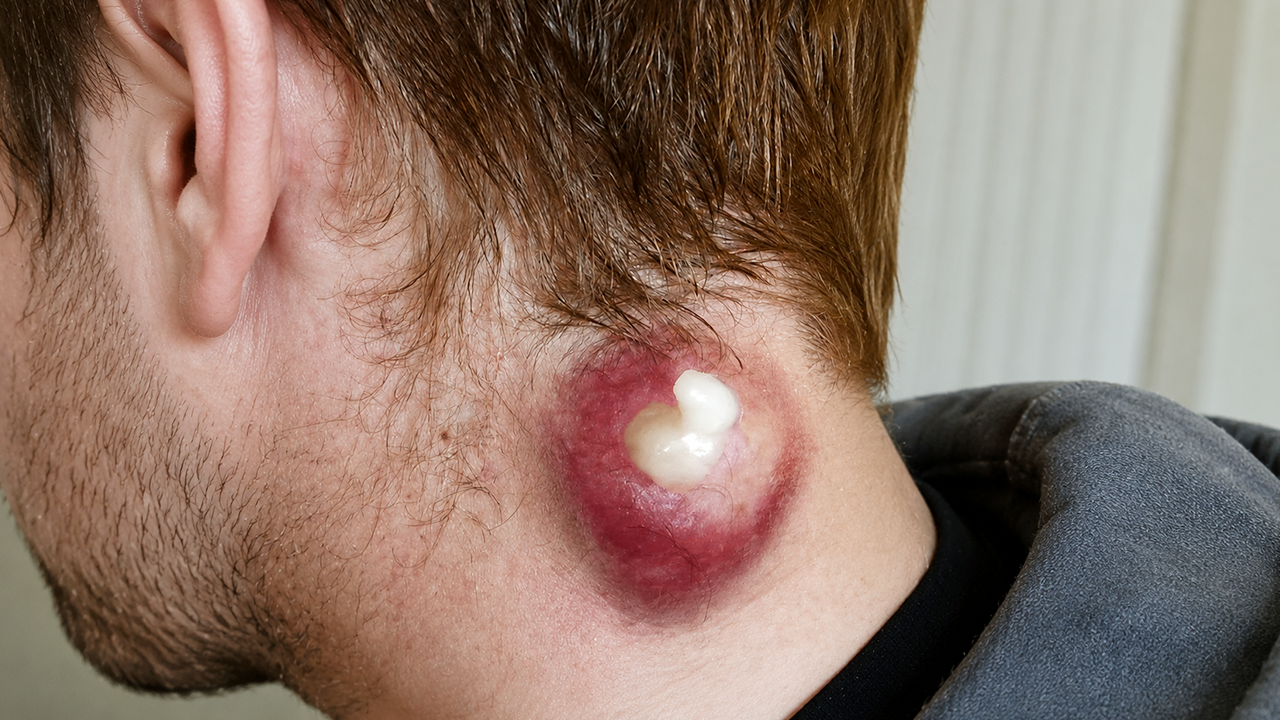
The image above shows a large neck abscess that has become severely inflamed and filled with pus. This type of infection requires proper medical attention because it can spread rapidly into nearby tissues and, in severe cases, throughout the body.
In this article, we’ll explain what causes a neck abscess, the warning signs you should never ignore, available treatment options, possible complications, and most importantly, how to prevent these painful infections from developing.
What Is a Neck Abscess?
A neck abscess is a collection of pus that forms beneath the skin after bacteria invade damaged tissue. As your immune system fights the infection, white blood cells, bacteria, and dead tissue accumulate inside a pocket surrounded by inflamed skin.
Unlike a simple pimple, an abscess is much deeper and often much larger. The infection causes increasing pressure beneath the skin, making the area swollen, warm, and extremely tender.
The body creates this pocket to contain the bacteria, but once the abscess becomes large, it usually cannot heal without drainage.
Why Does an Abscess Form?
Most skin abscesses begin when bacteria enter through tiny openings in the skin.
Common causes include:
- Ingrown hairs
- Infected hair follicles
- Small cuts
- Shaving injuries
- Acne
- Insect bites
- Skin friction
- Poor hygiene
- Existing cysts
The most common bacteria responsible is Staphylococcus aureus, including MRSA (Methicillin-resistant Staphylococcus aureus), although other bacteria may also cause infection.
Early Symptoms
In the beginning, an abscess may resemble an ordinary pimple.
Early signs include:
- Small red bump
- Mild tenderness
- Warm skin
- Slight swelling
- Firm lump under the skin
Many people mistake these symptoms for a harmless boil and delay treatment.
As the Infection Worsens
Without treatment, bacteria continue multiplying inside the tissue.
Symptoms become much more severe:
- Increasing redness
- Rapid swelling
- Severe pain
- Thick yellow or white pus
- Soft center
- Purple discoloration
- Tight shiny skin
- Difficulty moving the neck
- Fever
- Chills
The swelling can become several centimeters wide within only a few days.
Why Neck Abscesses Are Especially Dangerous
The neck contains many important structures including:
- Major blood vessels
- Nerves
- Salivary glands
- Muscles
- Airways
- Lymph nodes
Because of these structures, infections in this area may spread faster than infections elsewhere on the body.
Deep neck infections can become medical emergencies.
What Is Pus?
Many people believe pus is simply “infection.”
Actually, pus contains:
- Dead white blood cells
- Dead bacteria
- Living bacteria
- Damaged tissue
- Protein-rich fluid
The yellow or white color comes primarily from the immune cells fighting the infection.
Why Antibiotics Alone May Not Work
One of the biggest misconceptions is that antibiotics alone will cure every abscess.
Unfortunately, once a pocket of pus forms, antibiotics often cannot penetrate the center effectively.
This is why many patients require:
- Incision
- Drainage
- Cleaning
- Sometimes antibiotics afterward
Removing the pus allows the surrounding tissue to heal properly.
Common Risk Factors
Certain people are more likely to develop abscesses.
Risk factors include:
- Diabetes
- Smoking
- Obesity
- Poor circulation
- Immune disorders
- Cancer treatment
- Chronic skin diseases
- Poor nutrition
- Repeated shaving irritation
Individuals with weakened immune systems may develop larger and more dangerous infections.
Can You Pop an Abscess at Home?
Many people attempt to squeeze boils themselves.
This is extremely risky.
Squeezing may:
- Push bacteria deeper
- Spread infection
- Increase swelling
- Cause severe pain
- Leave scars
- Damage nearby tissue
Using dirty needles or sharp objects dramatically increases the chance of complications.
Warning Signs That Need Immediate Medical Attention
Seek medical care immediately if you notice:
- Fever
- Chills
- Rapid swelling
- Difficulty swallowing
- Trouble breathing
- Increasing redness
- Severe pain
- Red streaks on the skin
- Confusion
- Persistent drainage
These symptoms may indicate that the infection is spreading.
How Doctors Diagnose an Abscess
Diagnosis usually begins with a physical examination.
Doctors evaluate:
- Size
- Depth
- Tenderness
- Warmth
- Redness
- Drainage
- Location
If the abscess is unusually large or deep, imaging tests may be ordered.
These include:
- Ultrasound
- CT scan
- MRI
Blood tests may also be performed if systemic infection is suspected.
Standard Treatment
The gold-standard treatment is incision and drainage.
During the procedure:
- The skin is cleaned.
- Local anesthesia is applied.
- A small incision is made.
- Thick pus drains out.
- The cavity is cleaned.
- Sometimes gauze packing is inserted.
The procedure often provides immediate relief because pressure beneath the skin decreases dramatically.
Do All Abscesses Need Surgery?
Not always.
Very small abscesses may occasionally drain naturally.
However, larger infections usually require professional drainage.
Waiting too long often makes treatment more complicated.
Will Antibiotics Be Prescribed?
Antibiotics are often recommended when:
- Fever is present
- Cellulitis surrounds the abscess
- The patient has diabetes
- Immune function is weakened
- The infection is extensive
- MRSA is suspected
The specific medication depends on bacterial culture results and local resistance patterns.
Recovery After Drainage
Healing usually occurs over several weeks.
Patients should:
- Keep the wound clean
- Change dressings regularly
- Take medications exactly as prescribed
- Avoid picking at the wound
- Attend follow-up appointments
Proper wound care greatly reduces the chance of recurrence.
Possible Complications
Untreated abscesses may lead to:
- Cellulitis
- Bloodstream infection (sepsis)
- Tissue destruction
- Permanent scarring
- Recurrent abscesses
- Deep neck infection
- Airway obstruction
Prompt treatment greatly lowers these risks.
Can an Abscess Come Back?
Unfortunately, yes.
Some people experience repeated abscesses.
Possible reasons include:
- Persistent bacteria on the skin
- Diabetes
- Smoking
- Poor hygiene
- Chronic skin disorders
- Blocked oil glands
- Incomplete drainage
Finding the underlying cause is important to prevent future infections.
Prevention Tips
Good skin care significantly lowers the risk of infection.
Helpful habits include:
- Wash skin regularly.
- Clean cuts immediately.
- Avoid sharing razors or towels.
- Shave carefully.
- Treat acne early.
- Wear clean clothing.
- Maintain healthy blood sugar if you have diabetes.
- Eat a balanced diet.
- Stay hydrated.
- Avoid smoking.
These simple measures reduce bacterial growth and help protect the skin.
The Difference Between a Pimple, Boil, and Abscess
Many people confuse these conditions.
A pimple:
- Usually small
- Related to clogged pores
- Mild discomfort
A boil:
- Infection of a hair follicle
- Larger
- More painful
- Often drains pus
An abscess:
- Much deeper
- Larger pocket of infection
- Significant swelling
- Often requires drainage
Understanding the difference can help you know when medical care is necessary.
Why You Should Never Delay Treatment
Many patients wait until the pain becomes unbearable before seeking help.
Unfortunately, infections rarely improve once a large pus pocket has formed.
Early medical treatment usually means:
- Less pain
- Smaller incision
- Faster recovery
- Lower medical costs
- Reduced risk of complications
Waiting only allows bacteria to continue damaging surrounding tissue.
Caring for the Skin After Healing
Even after recovery, proper skin care remains important.
To minimize scarring:
- Protect healing skin from the sun.
- Avoid scratching.
- Keep the area moisturized after the wound closes.
- Follow your healthcare provider’s wound-care instructions.
Scars generally fade over time, although larger abscesses may leave permanent marks.
Frequently Asked Questions
Is a neck abscess contagious?
The abscess itself is not contagious, but the bacteria causing it can spread through direct contact with drainage or contaminated personal items. Good hygiene and proper wound care help reduce transmission.
Can stress cause an abscess?
Stress does not directly cause an abscess, but chronic stress may weaken immune function, making infections more likely in some people.
Can an abscess heal without draining?
Very small abscesses occasionally resolve on their own, but larger collections of pus often require professional drainage for complete healing.
How long does healing take?
Recovery depends on the size and depth of the infection. Small abscesses may heal within one to two weeks, while larger wounds can take several weeks.