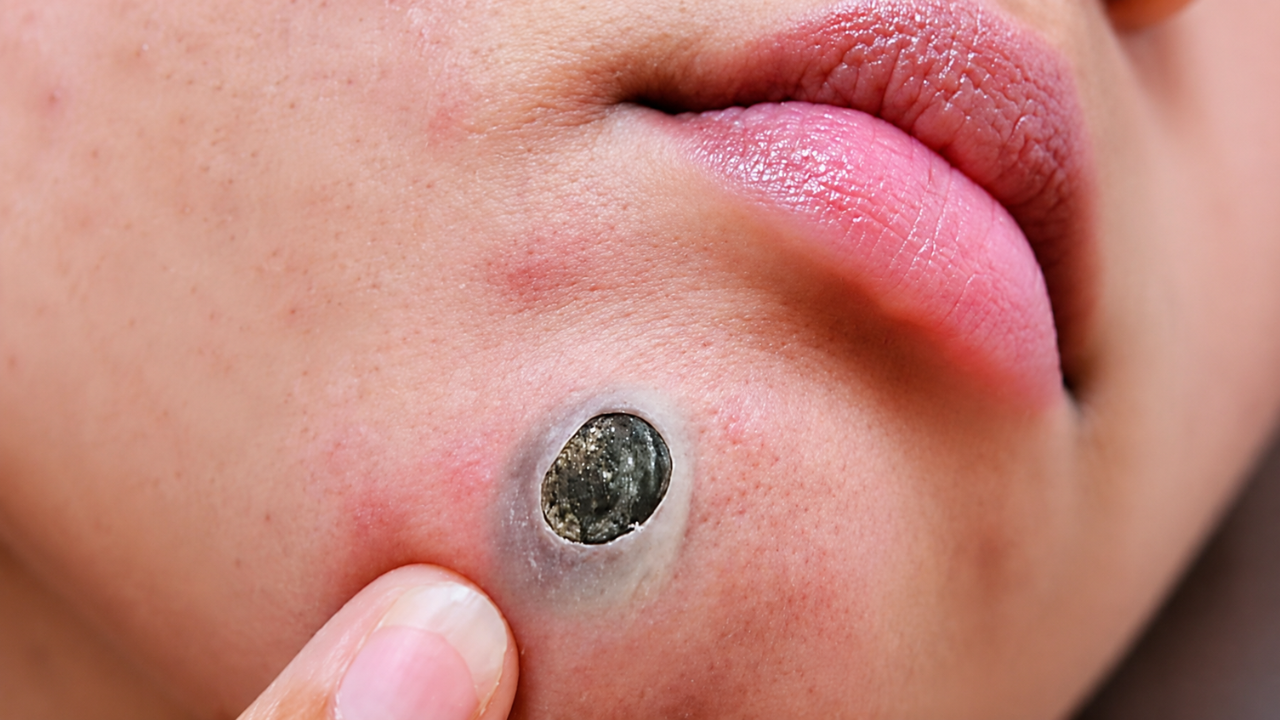
The image shows a dramatic close-up of what appears to be a large, dark, embedded skin lesion on a person’s chin — possibly a giant comedone (blackhead), an infected cyst, or a similar dermatological condition. While such images often circulate on social media as part of the popular “pimple popping” or extraction content genre, they also raise important questions about skin health, when home care is appropriate, and when professional medical intervention is essential. This article explores the science behind these lesions, why they form, and how they should be properly managed.
What Are We Actually Looking At?
A lesion like the one pictured — large, dark, deeply embedded, and surrounded by inflamed skin — is most likely one of several common dermatological conditions:
1. Giant Comedone (Dilated Pore of Winer)
A giant comedone, sometimes called a dilated pore of Winer, is essentially an oversized blackhead. It forms when a single hair follicle becomes massively enlarged and packed with keratin (dead skin cells) and sebum (skin oil). The dark color comes not from dirt, as is often assumed, but from melanin oxidation — the same process that turns a cut apple brown when exposed to air.
These lesions typically appear on the face, back, or chest of adults, often middle-aged or older. They are generally harmless but can be cosmetically distressing and, if traumatized, can become infected.
2. Epidermoid Cyst
An epidermoid cyst is a closed sac beneath the skin filled with keratin — a thick, cheesy, sometimes foul-smelling material. These cysts develop when surface skin cells move deeper into the skin instead of shedding, forming a wall that traps keratin inside. They can range from pea-sized to several centimeters across and may have a small dark “punctum” on the surface — a visible opening that can resemble a blackhead.
When inflamed or infected, epidermoid cysts become red, swollen, and painful — exactly the kind of presentation visible in the image.
3. Sebaceous Cyst
Often confused with epidermoid cysts, true sebaceous cysts (or steatocystomas) originate from sebaceous glands and contain oily, yellowish material rather than keratin. They are less common than epidermoid cysts but are managed similarly.
4. Infected or Inflamed Acne Lesion
Severe nodulocystic acne can produce large, deep, dark lesions that look similar to giant comedones. The combination of bacterial infection (often Cutibacterium acnes), trapped sebum, and inflammation can create lesions that are alarming in appearance.
Why Do These Lesions Form?
Skin lesions of this kind develop through a combination of factors:
Genetics
Some people are simply more prone to developing cysts and giant comedones. A family history of these conditions, or of conditions like Gardner syndrome or steatocystoma multiplex, significantly raises the risk.
Hormonal Influences
Androgens — male-type hormones present in everyone — stimulate sebaceous glands to produce more oil. This is why acne and related conditions often flare during puberty, menstruation, pregnancy, or with conditions like polycystic ovary syndrome (PCOS).
Sun Damage
Chronic sun exposure damages skin structure and can lead to the development of giant comedones, particularly the variant known as Favre-Racouchot syndrome, which causes multiple comedones around the eyes and cheeks in older adults with significant sun damage.
Trauma and Skin Injury
Repeated trauma to an area of skin — from picking, squeezing, shaving irritation, or friction — can damage hair follicles and promote cyst formation.
Poor Skincare Habits
Heavy, oil-based cosmetics; failure to cleanse properly; and aggressive scrubbing can all contribute to clogged pores and lesion formation.
The Dangers of DIY Extraction
The image appears to show someone preparing to manipulate the lesion with their finger — a common but potentially dangerous practice. Here’s why home extraction is risky:
1. Infection
The skin’s surface harbors numerous bacteria, including Staphylococcus aureus. Squeezing a lesion can drive these bacteria deeper into the skin, transforming a manageable problem into a serious infection. Cellulitis, a spreading bacterial infection of the deeper skin layers, can result — and in severe cases requires intravenous antibiotics.
2. The “Danger Triangle” of the Face
Lesions on the central face — particularly between the corners of the mouth and the bridge of the nose — sit in what doctors call the “danger triangle.” Veins in this area drain directly into the cavernous sinus inside the skull, without the usual valves that prevent backflow. In rare but serious cases, squeezing infected lesions here can lead to cavernous sinus thrombosis, a life-threatening condition. The chin area, while not strictly within this triangle, is close enough that caution is warranted.
3. Scarring
Improper extraction almost always causes more tissue damage than the original lesion. Picking, squeezing, or digging at the skin breaks blood vessels, damages collagen, and can leave permanent atrophic scars (pitted), hypertrophic scars (raised), or post-inflammatory hyperpigmentation (dark marks that can last months or years).
4. Incomplete Removal
A cyst, in particular, will almost always return if its sac wall is left behind. Home squeezing typically expresses some of the contents but leaves the wall intact, guaranteeing recurrence — often with worse inflammation than before.
5. Spreading the Problem
Trauma to one lesion can spread bacteria and inflammatory material to surrounding pores, triggering new breakouts in the area.
When to See a Dermatologist
A lesion like the one pictured genuinely warrants professional evaluation. You should see a dermatologist or physician if:
- The lesion is larger than a pea
- It is painful, hot, or rapidly growing
- There is drainage of pus or foul odor
- The surrounding skin is red, swollen, or warm
- You have a fever along with the skin lesion
- The lesion has been present for months without resolving
- You have multiple similar lesions
- The lesion is in a cosmetically sensitive location like the face
Proper Medical Treatment
Dermatologists have several effective tools for treating large lesions:
Incision and Drainage
For acutely inflamed and infected cysts, a doctor will numb the area, make a small sterile incision, and drain the contents. This provides immediate relief but doesn’t prevent recurrence on its own.
Intralesional Steroid Injection
A small amount of dilute corticosteroid injected directly into an inflamed cyst can dramatically reduce swelling and pain within 24–48 hours. This is often used for inflamed acne cysts before any extraction is attempted.
Complete Surgical Excision
The definitive treatment for a cyst is complete surgical removal of the sac. Under local anesthesia, the dermatologist removes the entire cyst wall along with its contents. When done properly, recurrence is rare. The procedure leaves a small linear scar that typically heals well.
Punch Excision
For smaller cysts or giant comedones, a circular punch biopsy tool can remove the entire lesion in one piece. This is quick, effective, and often leaves minimal scarring.
Comedone Extraction
For true giant comedones (without cyst formation), a dermatologist can use a sterile comedone extractor to remove the contents safely. They may also enlarge the opening slightly to facilitate complete removal.
Antibiotics
If there are signs of infection — significant redness, warmth, pus, or systemic symptoms — oral antibiotics like cephalexin, doxycycline, or clindamycin may be prescribed.
Topical and Oral Acne Medications
For underlying acne tendencies, dermatologists prescribe retinoids (tretinoin, adapalene), benzoyl peroxide, salicylic acid, hormonal treatments, or in severe cases, isotretinoin (Accutane) to prevent future lesions.
Caring for Your Skin: Prevention
While not every cyst or lesion is preventable, good skin care substantially reduces risk:
Daily Cleansing
Wash your face twice daily with a gentle, non-comedogenic cleanser. Over-washing can be just as problematic as under-washing, stripping the skin’s natural barrier and triggering compensatory oil production.
Exfoliation
Chemical exfoliants with salicylic acid (a beta-hydroxy acid that penetrates oil) or glycolic acid (an alpha-hydroxy acid) help keep pores clear. Use them 2–3 times per week, not daily, to avoid irritation.
Non-Comedogenic Products
Look for the term “non-comedogenic” on cosmetics, sunscreens, and moisturizers. These products are formulated to avoid clogging pores.
Sun Protection
Daily broad-spectrum SPF 30+ sunscreen prevents the chronic sun damage that contributes to giant comedone formation, particularly in older adults.
Hands Off
This cannot be emphasized enough: stop touching your face. Resist the urge to pick, squeeze, or examine lesions in the mirror. Picking is one of the strongest predictors of permanent scarring.
Pillowcase Hygiene
Change pillowcases at least twice a week. They accumulate oil, dead skin cells, and bacteria that can contribute to facial breakouts.
Diet and Lifestyle
Evidence suggests that high-glycemic diets and dairy products may worsen acne in susceptible individuals. Managing stress, getting adequate sleep, and staying hydrated all support skin health.
The Psychological Dimension
Large facial lesions can have a significant psychological impact. Studies consistently show that visible skin conditions affect:
- Self-esteem and body image
- Social functioning and willingness to engage in public activities
- Mental health, with elevated rates of anxiety and depression
- Occupational confidence, particularly in client-facing roles
This emotional toll is real and valid. Anyone struggling psychologically with a skin condition should know that dermatological treatment is medical care, not vanity. Effective treatments exist, and dermatologists are accustomed to helping patients with both the physical and emotional dimensions of skin disease.
The Pimple-Popping Phenomenon
It’s worth briefly addressing the cultural fascination with content showing lesion extractions. Channels and videos featuring dermatologists performing extractions have amassed billions of views, with figures like Dr. Sandra Lee (“Dr. Pimple Popper”) becoming household names.
Psychologists offer several theories for the appeal:
- The satisfaction of resolution — watching a “problem” being completely solved
- A sense of vicarious cleanliness — the visceral pleasure of seeing something removed
- ASMR-like sensory engagement
- Curiosity about the human body in its less polished states
While these videos can be educational, they can also encourage viewers to attempt risky home extractions. The crucial point: trained dermatologists work in sterile conditions with proper tools, anesthesia, and the skill to manage complications. What looks easy on video is genuinely difficult and dangerous to replicate at home.
A Note on the Image
The lesion in the photograph appears severe — large, deeply embedded, and surrounded by visibly inflamed skin. If this were a real patient (rather than a stock or staged image), the appropriate course of action would be clear: consult a dermatologist rather than attempt extraction with bare fingers. The position so close to the lip means there’s also a risk of damaging delicate tissue and creating noticeable scarring in a highly visible area.
Conclusion
Behind every dramatic close-up of a skin lesion lies a real biological process — a story of clogged follicles, trapped keratin, overactive oil glands, and inflammation. While the urge to extract, squeeze, or remove such lesions yourself can be powerful, the wisdom of dermatology is unanimous: professional treatment is safer, more effective, and ultimately more satisfying than any home attempt.
Healthy skin is not the result of aggressive intervention but of consistent care, gentle products, sun protection, and timely professional help when problems arise. The next time you encounter a stubborn lesion — whether on yourself or in a viral image online — let it be a reminder of the remarkable complexity of human skin, and of the importance of treating it with the respect it deserves.