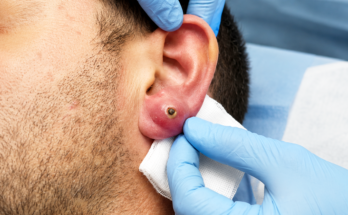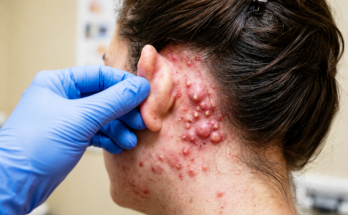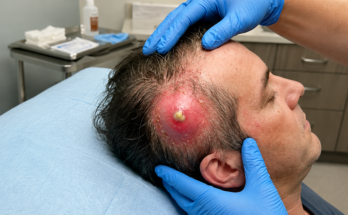
A swollen, red, and painful earlobe can be alarming. When swelling becomes severe, the skin may appear shiny, bruised, or discolored, and sometimes a yellow or dark area may develop on the surface. Although many people assume it is simply a pimple, a swollen earlobe can result from several different conditions. Proper evaluation and treatment are important because infections can worsen if ignored.
Understanding Earlobe Swelling
The earlobe is made of soft tissue containing skin, fat, blood vessels, and nerve endings. Unlike the upper ear, the earlobe does not contain cartilage, making it more flexible but still vulnerable to injury and infection.
Swelling develops when the body’s immune system responds to irritation, injury, or infection. Blood flow increases to the area, bringing immune cells that help fight harmful bacteria or repair damaged tissue. This process often causes redness, warmth, tenderness, and pain.
Common Causes
1. Bacterial Skin Infection
One of the most common reasons for a swollen earlobe is a bacterial skin infection. Bacteria can enter through tiny cuts, scratches, insect bites, or piercing holes. Once bacteria invade the tissue, inflammation develops rapidly.
Common symptoms include:
- Redness
- Warm skin
- Swelling
- Pain when touched
- Pus formation
- Fever in severe cases
Without treatment, the infection may spread deeper into surrounding tissue.
2. Infected Ear Piercing
Ear piercings create a small wound that usually heals without problems. However, improper cleaning, touching the piercing with dirty hands, or wearing contaminated jewelry may allow bacteria to enter.
Signs include:
- Persistent redness
- Yellow or green drainage
- Bad odor
- Swelling
- Pain
- Difficulty removing earrings
People with new piercings should carefully follow aftercare instructions to reduce infection risk.
3. Skin Abscess
An abscess is a pocket of pus that forms beneath the skin. It usually develops after bacteria become trapped inside hair follicles or blocked oil glands.
Symptoms include:
- Round swollen lump
- Severe tenderness
- Soft center filled with pus
- Warm skin
- Increasing pressure
- Possible spontaneous drainage
Large abscesses often require drainage by a healthcare professional.
4. Sebaceous or Epidermoid Cyst
Small skin cysts may develop when skin cells become trapped beneath the surface. These cysts often remain harmless for years.
Problems occur when they become infected or inflamed, leading to:
- Rapid enlargement
- Pain
- Redness
- Thick white or yellow discharge
- Local swelling
5. Allergic Reaction
Some people develop allergic reactions to earrings, especially those containing nickel.
Symptoms may include:
- Itching
- Red rash
- Swelling
- Burning sensation
- Dry or peeling skin
Changing to hypoallergenic jewelry often resolves the issue.
6. Insect Bite
Mosquitoes, spiders, bees, or other insects can bite the ear.
Typical symptoms:
- Sudden swelling
- Itching
- Mild redness
- Small puncture mark
- Temporary discomfort
Most bites improve within several days.
7. Trauma
Physical injuries such as sports accidents, falls, or blunt impact can bruise the earlobe.
Bruising may appear purple, blue, or dark red while swelling develops due to bleeding beneath the skin.
Symptoms That May Occur
Depending on the underlying cause, symptoms may include:
- Swollen earlobe
- Redness
- Purple discoloration
- Shiny skin
- Tenderness
- Throbbing pain
- Warm skin
- Drainage of pus
- Crusting
- Fever
- Enlarged lymph nodes
- Difficulty sleeping due to pain
What the Image May Suggest
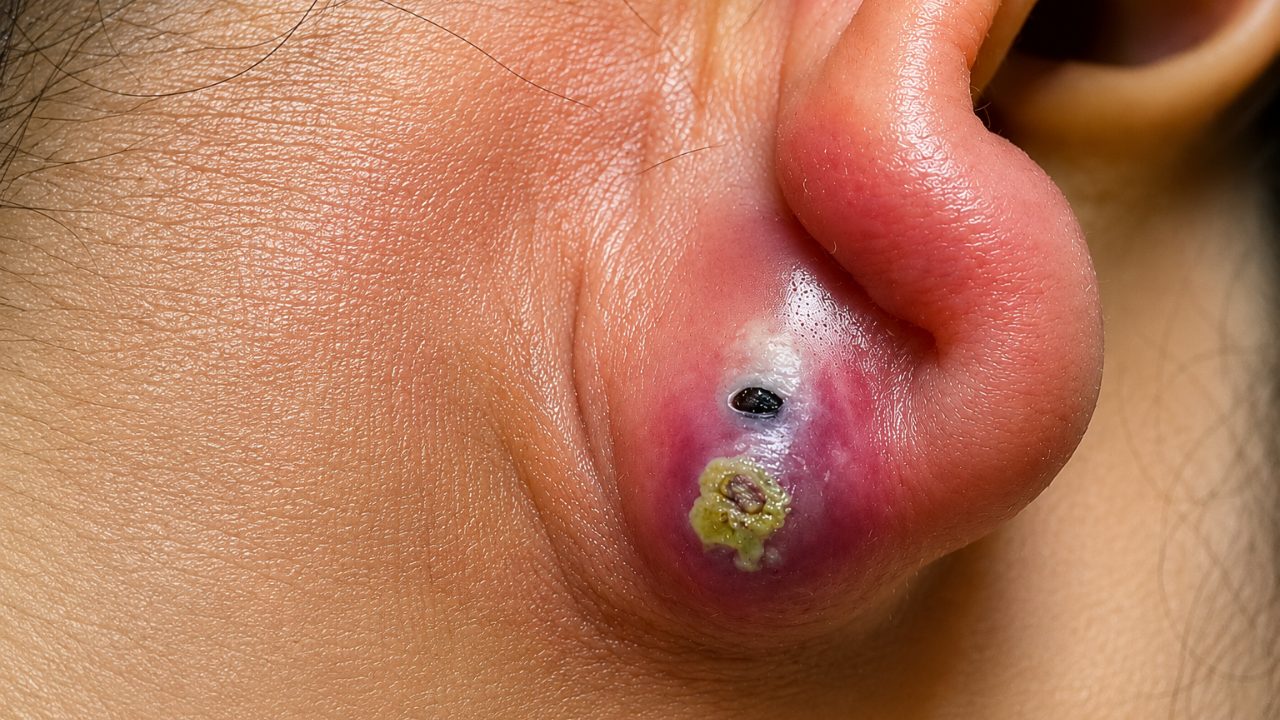
The image shows a markedly swollen and discolored earlobe with surface changes that could be consistent with a severe skin infection, an inflamed cyst, or an abscess. However, it is not possible to make a diagnosis from a photo alone.
A healthcare professional would need to examine the area, ask about symptoms, and determine whether drainage, antibiotics, or another treatment is appropriate.
When Medical Attention Is Needed
Seek prompt medical care if you experience:
- Rapidly increasing swelling
- Severe pain
- Fever
- Red streaks spreading from the ear
- Thick pus drainage
- Swelling extending into the face or neck
- Difficulty hearing
- Persistent bleeding
- Symptoms lasting more than a few days
Early treatment often prevents complications.
Treatment Options
Treatment depends on the underlying cause.
Possible treatments include:
- Warm compresses
- Prescription antibiotics
- Cleaning the wound
- Drainage of an abscess by a healthcare professional
- Pain relievers
- Removal of infected earrings
- Allergy treatment if jewelry is the cause
Never attempt to cut, squeeze, or puncture a swollen lump yourself, as this may worsen the infection or spread bacteria.
Home Care
While waiting to see a healthcare provider, you can:
- Keep the area clean.
- Wash your hands before touching the ear.
- Avoid wearing earrings if the piercing is irritated.
- Apply a warm compress for 10–15 minutes several times a day if advised by a healthcare professional.
- Avoid squeezing or picking at the swollen area.
- Follow any prescribed treatment exactly as directed.
Prevention Tips
Many ear infections can be prevented by practicing good hygiene.
Helpful habits include:
- Clean new piercings regularly.
- Use sterile equipment for piercings.
- Avoid sharing earrings.
- Replace damaged jewelry.
- Wash hands before touching piercings.
- Treat small cuts promptly.
- Avoid scratching itchy ears.
Possible Complications
If untreated, a severe infection may lead to:
- Enlarging abscess
- Spread of infection into nearby tissue
- Scarring
- Permanent skin damage
- Recurrent cyst formation
- Chronic inflammation
Prompt medical care greatly reduces these risks.
Frequently Asked Questions
Is it safe to pop a swollen lump?
No. Squeezing or puncturing it yourself can push bacteria deeper into the tissue and worsen the infection.
Can an infected piercing heal without antibiotics?
Minor irritation may improve with proper cleaning, but significant swelling, pus, or increasing pain should be evaluated by a healthcare professional, who can determine whether antibiotics are needed.
Can allergies cause swelling?
Yes. Allergic reactions to certain metals, especially nickel, may cause redness, itching, and swelling around the piercing site.
How long does recovery take?
Recovery varies depending on the cause. Mild irritation may improve within a few days, while infections or abscesses may take one to several weeks with appropriate treatment.
Final Thoughts
A swollen, painful earlobe should never be ignored, especially when accompanied by redness, discoloration, drainage, or severe tenderness. Although some cases result from minor irritation, others may indicate an infection or abscess that requires medical treatment. Seeking timely medical evaluation, practicing good hygiene, and avoiding self-drainage can help prevent complications and support a faster recovery.
Disclaimer: This article is for educational purposes only and should not replace professional medical advice, diagnosis, or treatment. If you have severe pain, fever, rapidly worsening swelling, or signs of infection, consult a qualified healthcare professional promptly.